Car Won't Start and Just Clicks? Here's Why in Lawrenceburg, TN
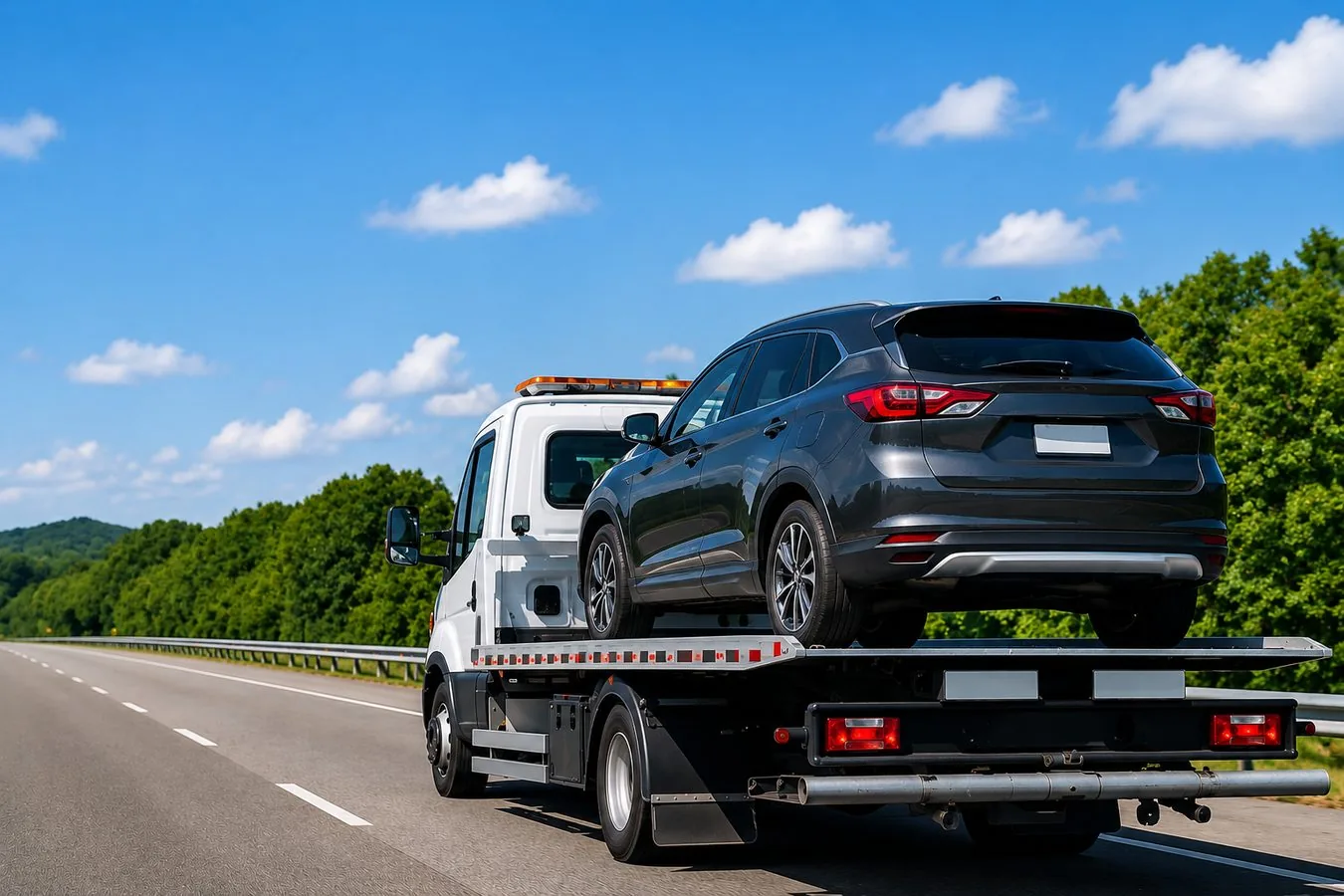
You slide behind the wheel, turn the key or press the button, and instead of the engine roaring to life you get a sound that makes your stomach drop: click-click-click-click. Or maybe one loud, single clunk and then nothing. If your car won't start and just clicks in Lawrenceburg, TN, the good news is that this is one of the most common breakdowns we respond to across Lawrence County, and it is almost always fixable on the spot or with a quick flatbed tow to a shop.
At Lawrenceburg Towing we run 24/7, we are licensed and insured, and we cover every corner of ZIP 38464 and the surrounding towns. This guide walks you through exactly what that clicking noise means, the quick checks you can safely do yourself, and the point where it is smarter to stop turning the key and let a pro handle it. Whether you are parked in your driveway off US-43 or stranded in a lot near the Lawrence County Courthouse, understanding the sound is the first step to getting rolling again.
What That Clicking Sound Actually Means
The clicking you hear is coming from your starter system, and it is telling a very specific story. When you turn the key, your battery sends a jolt of electricity to a small part called the starter solenoid. The solenoid then engages the starter motor, which spins the engine fast enough to fire. That click is the solenoid trying to do its job.
The problem is almost always about electrical current, not fuel or spark. If the battery cannot push enough power through the cables, the solenoid clicks but there is not enough juice left to actually turn the heavy starter motor and crank the engine. In other words, the click means the system is trying but the power is coming up short. In the vast majority of the no-start calls we get around Lawrenceburg, a weak or dead battery is the root cause.
Weather plays a role too. Middle Tennessee winters get cold enough to sap a marginal battery overnight, and the brutal summer heat we see off US-64 quietly cooks batteries from the inside all season long. A battery that was fine last week can leave you clicking in a parking lot with no warning, which is why so many of these calls feel like they come out of nowhere.
Rapid Clicking vs. One Single Click: How to Tell Them Apart
Before you do anything else, listen carefully, because the pattern of the clicks narrows down the cause fast. This one detail often tells our drivers what tools and parts to bring before we even arrive.
- Rapid, machine-gun clicking (click-click-click-click): This is the classic dead-battery signature. The battery has just enough power to chatter the solenoid on and off, but not enough to hold it engaged and spin the motor. Nine times out of ten, a jump start solves this instantly.
- One single, loud click and nothing: This points more toward a failed starter motor, a bad solenoid, or a poor connection at the battery terminal or ground. The battery may have decent charge, but the current is not reaching where it needs to go. A jump may not fix this one, and the car often needs a tow.
- No click at all, just silence or dash lights flickering: This usually means a completely dead battery, badly corroded terminals, or a wiring fault. Look for dim or flickering dashboard lights when you turn the key as a clue.
Take note of which pattern you hear. When you call us, telling our dispatcher whether it is rapid clicking or a single clunk helps us send the right help the first time.
Quick Checks You Can Do in Your Driveway (or on US-43)
If you are somewhere safe, off the roadway, and comfortable poking around, there are a few no-tools checks that can either get you moving or confirm you need a hand. Never do these on a live traffic lane. If you are on the shoulder of a highway, stay buckled with your hazards on and call for help instead.
- Turn on your headlights and try to start. If the headlights are bright but dim dramatically the instant you turn the key, your battery is weak. If they stay bright and you still get clicks, the battery may be fine and the starter is the suspect.
- Check the battery terminals. Pop the hood and look at the two cables clamped to the battery. White or greenish crusty buildup, or a cable you can wiggle by hand, means a bad connection. Sometimes reseating a loose clamp is all it takes.
- Try the door and dome lights. Dead-quiet interior lights and a dark dashboard point to a fully drained or disconnected battery.
- Wiggle the shifter (automatics). Occasionally a car in Park won't start because of a neutral-safety switch quirk. Shift into Neutral, then back to Park, and try again. It is a long shot, but it is free.
These checks take two minutes and often reveal exactly what is wrong. What they cannot do is safely deliver a jump on a busy road or diagnose a failing starter. That is where we come in.
When It's Not the Battery: Starter, Alternator, and Ground Issues
Sometimes a jump start fires the engine right up, you drive off happy, and then the car dies again a few hours or a few days later. When that happens, the battery was a symptom, not the disease. Here are the usual culprits behind a repeat no-start:
- Failing alternator: The alternator recharges your battery while you drive. If it is dying, the battery slowly drains until you are back to clicking. A classic sign is a battery or charging warning light on the dash and headlights that pulse or dim while driving.
- Bad starter motor: Starters wear out. If a fully charged battery still gives you a single click or a grinding whir with no crank, the starter is likely done and the vehicle needs to go to a shop on a flatbed.
- Corroded or loose ground strap: Your engine needs a solid ground connection. A corroded ground cable can mimic a dead battery even when the battery is healthy.
- Parasitic drain: A stuck relay, a trunk light that never shuts off, or an aftermarket accessory can quietly drain your battery overnight, every night.
If your car has now left you stranded more than once, a jump is only a temporary patch. According to AAA guidance on no-start situations, repeated failures point to a charging or starting-system fault that needs proper diagnosis. In those cases we recommend a wheel-lift or flatbed tow straight to a trusted local mechanic rather than repeated roadside jumps that just kick the problem down the road.
When to Stop Cranking and Call a Tow in Lawrence County
There is a moment where turning the key again does more harm than good. Every time you crank a struggling engine, you drain the battery further and, if the starter is failing, you risk burning it out completely. Stop and call for help when:
- You have tried to start three or four times with no change in the sound.
- You smell anything hot, burning, or electrical.
- The car started after a jump but died again shortly after.
- You are on a road shoulder, a blind curve, or anywhere unsafe on US-43, US-64, or TN-6.
- It is late, cold, raining, or you simply do not feel safe working on the car where you are.
When you call Lawrenceburg Towing, our dispatcher will ask about the clicking pattern and your location so we send the right response. If a jump gets you going, great, you are only out a service call. If the starter or alternator is the problem, our DOT compliant flatbed will load your car without a scratch and get it to the shop of your choice. We serve Lawrenceburg, Loretto, St. Joseph, Ethridge, Summertown, Leoma, Five Points, and everywhere in between, day and night.
Being a local towing company first, we treat a clicking no-start as the emergency it feels like when you are late for work or stuck with kids in the back seat. You do not need to guess whether it is the battery or the starter. Call us, describe the sound, and we will bring the jump pack, the tools, and the flatbed so whatever the answer turns out to be, you are covered in one trip.
Clicking but not starting? We'll get you rolling.
24/7 jump start and flatbed towing across Lawrenceburg and all of Lawrence County. Licensed, insured, and usually 30 to 45 minutes away.
📞 Call (931) 286-7805Frequently Asked Questions
Does a clicking noise always mean my battery is dead?
Most of the time, yes. A rapid series of clicks almost always points to a weak or dead battery that cannot deliver enough current to spin the starter. A single loud click is more likely a failed starter motor or a bad connection. A jump start will confirm it: if the car fires up and stays running, the battery was the culprit. If it still only clicks after a solid jump, the problem is usually the starter and the vehicle will need a tow to a shop.
How fast can Lawrenceburg Towing reach me if my car won't start?
We run 24/7 across Lawrenceburg and Lawrence County, TN, and typically reach drivers within 30 to 45 minutes depending on your location. Whether you are stalled in a driveway off US-43, in a parking lot near the Lawrence County Courthouse, or on the shoulder of US-64, call (931) 286-7805 and we will dispatch a jump start or a flatbed tow right away.