Flatbed Towing in Lawrence County TN — When You Need It and Why (Serving Lawrenceburg, TN)
If you have ever stood on the shoulder of US-43 watching a tow truck back up to your car, you have probably wondered the same thing most drivers do: is this the right kind of truck for my vehicle? In Lawrence County, the answer is often a flatbed. Flatbed towing — sometimes called rollback or slide-bed towing — is the gold standard for moving a disabled vehicle safely, and for a lot of the cars on the road around Lawrenceburg today, it is the only method that won't risk expensive damage on the way to the shop.
This guide breaks down exactly when you need flatbed towing here in Lawrence County, how it differs from wheel-lift towing, what affects the price, and how to make sure the vehicle that shows up is actually equipped for your situation. We tow on these roads every day across Lawrenceburg, Loretto, St. Joseph, Ethridge, Summertown, Leoma, and Five Points, so this is written from what we actually see in the field — not a generic checklist.
What Flatbed Towing Actually Is
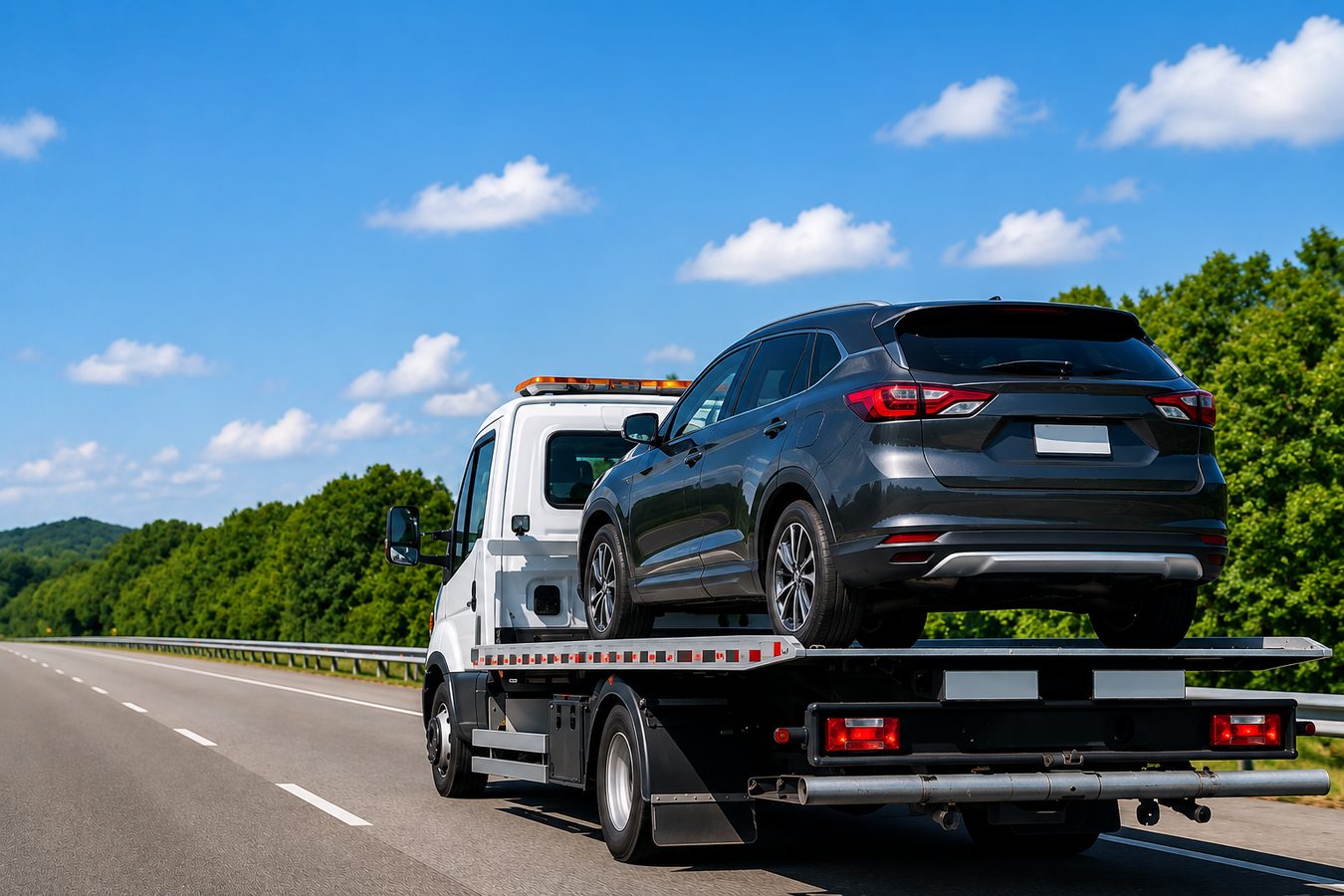
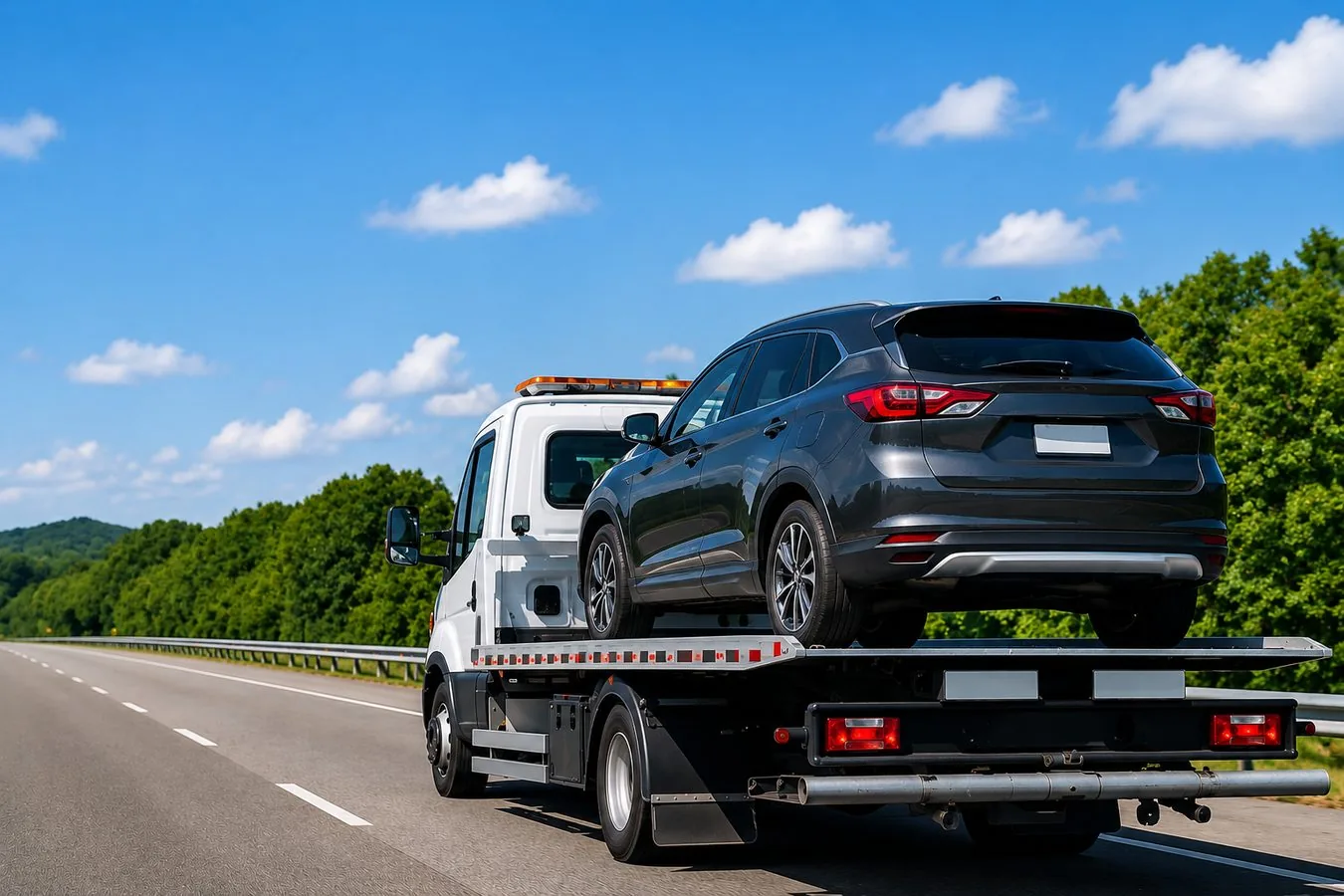
A flatbed tow truck has a long, flat steel bed that hydraulically tilts and slides down to ground level. Your vehicle is winched up onto that bed and secured, so all four wheels leave the pavement entirely and ride flat the whole way. Nothing drags, nothing spins, and the vehicle sits level instead of nose-down or tail-up.
Compare that to wheel-lift towing, where a metal yoke cradles two of the tires and lifts one end of the car while the other two wheels roll along the road. Wheel-lift is fast, nimble in tight spots, and perfectly fine for a lot of front-wheel-drive cars going a short distance. But it leaves two wheels turning on the asphalt, and for certain vehicles that is a problem. A flatbed sidesteps all of that by carrying the entire car.
Both methods have their place, and a licensed and insured operator will tell you honestly which one your car needs. The difference matters most when your vehicle is valuable, low to the ground, all-wheel-drive, or already damaged.
When You Genuinely Need a Flatbed in Lawrence County
Plenty of tows around Lawrenceburg can be done either way, but these situations call for a flatbed specifically — and trying to save a few dollars with the wrong truck can cost you far more in repairs:
- All-wheel-drive and four-wheel-drive vehicles. Towing an AWD car with two wheels still on the ground can wreck the transmission, transfer case, or differential. A flatbed lifts all four wheels off the road and eliminates the risk completely.
- Low-clearance and performance cars. Sports cars, lowered vehicles, and many newer sedans have front air dams and bumpers that scrape badly on a wheel-lift. Loaded gently on a flatbed with the right ramps, they stay intact.
- Vehicles with drivetrain or wheel damage. If a wheel won't roll, an axle is broken, or the car was in a collision, dragging it isn't an option. A winch-out onto the bed is the safe move.
- Luxury, classic, and collector vehicles. When you don't want a single extra mile or stress on the suspension, flatbed transport is the standard the owner's manual usually recommends.
- Long-distance hauls. Heading from Lawrenceburg to Columbia, Pulaski, or the Nashville area? A flatbed protects tires and drivetrain over those miles in a way a wheel-lift can't.
If your vehicle falls into any of these categories, mention it when you call so the right truck rolls out the first time. The federal government's safety agency, the NHTSA, also stresses that getting a disabled vehicle moved off a live travel lane quickly is one of the most important things you can do — and a flatbed lets us clear the road fast without improvising.
Flatbed vs. Wheel-Lift: A Quick Comparison
Here is how the two methods stack up for the kinds of calls we get around Lawrenceburg and the 38464 area:
| Situation | Best Method | Why |
|---|---|---|
| Front-wheel-drive car, short tow | Wheel-lift or flatbed | Either works; wheel-lift is quick and economical |
| All-wheel-drive vehicle | Flatbed | Protects transmission and drivetrain |
| Lowered or sports car | Flatbed | Avoids scraping bumpers and undercarriage |
| Accident or broken wheel | Flatbed (winch-out) | Vehicle can't safely roll |
| Tight parking garage or alley | Wheel-lift | Smaller footprint, easier maneuvering |
| Long-distance haul | Flatbed | No road wear on tires or drivetrain |
The takeaway is simple: when in doubt, a flatbed is the safer choice, and a good operator will never put your vehicle on the wrong equipment just to finish faster.
What Flatbed Towing Costs Around Lawrenceburg
Pricing for a flatbed tow in Lawrence County comes down to a handful of factors, and any honest company will walk you through them before they hook up. The main drivers are the hook-up (base) fee, the per-mile rate for the distance to your destination, and any extras for difficult recoveries — like a winch-out from a ditch off TN-6 or a vehicle that slid off a gravel shoulder.
Flatbed service usually runs a little higher than a basic wheel-lift tow because it ties up a larger truck and takes a bit more time to load and secure. But for the vehicles that need it, that small difference is cheap insurance. A single transmission repair on an improperly towed AWD vehicle can cost thousands — far more than the modest premium for doing the tow correctly the first time. When you call us, you'll get a clear, upfront quote for your specific situation rather than a vague "we'll see when we get there."
Distance matters too. A tow within Lawrenceburg city limits is going to cost less than a haul out to St. Joseph, Summertown, or up toward the county line. If you're near a landmark like David Crockett State Park or the Lawrence County Courthouse, give us that detail — it helps us find you fast and quote accurately.
How to Choose the Right Flatbed Towing Company
Not every truck that shows up is the right one, and not every operator handles your vehicle the way they should. A few things to look for when you're picking who to call in Lawrence County:
- Licensed and insured. Ask. A reputable company carries proper insurance and operates DOT compliant equipment, which protects you if anything goes wrong during the tow.
- Right equipment for your vehicle. Confirm they're sending a flatbed if your car needs one, and that they have soft straps and wheel-lift options for the jobs that call for them.
- 24/7 availability. Breakdowns don't keep business hours. Around-the-clock dispatch means you're not stranded overnight on a dark stretch of US-43.
- Local knowledge. A driver who knows the back roads of Lawrence County — and the difference between a Leoma address and an Ethridge one — gets to you faster and quotes you straighter.
- Honest, upfront pricing. You should hear the cost structure before the truck arrives, not be surprised by it after your car is already on the bed.
That's the standard we hold ourselves to on every call. We run flatbed, wheel-lift, and heavy-duty equipment, and we'll always match the truck to the job instead of forcing your car onto whatever happens to be closest.
What to Do While You Wait for the Flatbed
Once you've called and a flatbed is on the way, the next 30–45 minutes are about staying safe — especially on faster roads like US-43, US-64, or TN-6 where traffic moves quickly. If your vehicle is drivable and it's safe to do so, ease it onto the shoulder or into a nearby lot rather than leaving it in a travel lane. Turn on your hazard lights right away so approaching drivers can see you well before they reach you.
If you can get out safely, exit on the side away from traffic and wait behind the guardrail or well off the road rather than sitting in the car next to passing vehicles. Set out reflective triangles or flares if you have them, particularly after dark or in fog, which rolls into the low spots around Lawrence County more often than people expect. Keep your phone handy so our driver can reach you, and have a landmark ready — "just past David Crockett State Park" or "near the Lawrence County Courthouse" gets help to you faster than a mile marker you're squinting to read. When the flatbed arrives, let the operator handle the loading; a winch-out or a tricky angle is exactly what the equipment and training are for.
Need a Flatbed Tow in Lawrence County?
Available 24/7 across Lawrenceburg, Loretto, St. Joseph, Ethridge, Summertown, Leoma & Five Points. Fast response, fair pricing, and the right equipment every time.
📞 Call (931) 286-7805Frequently Asked Questions
Is flatbed towing more expensive than wheel-lift towing in Lawrence County?
Flatbed towing usually costs a little more than wheel-lift because it ties up a larger truck and loads the whole vehicle off the ground. For most cars and short hauls around Lawrenceburg the difference is modest, and for AWD vehicles, low-clearance cars, or anything with drivetrain damage, a flatbed is the only safe option — making it cheaper than the repair bill a wrong tow can cause.
Can a flatbed tow my all-wheel-drive vehicle without damaging it?
Yes. A flatbed is the recommended method for all-wheel-drive and four-wheel-drive vehicles because all four wheels leave the road and ride flat on the bed. Towing an AWD car with two wheels still spinning on the pavement can damage the transmission, transfer case, or differential, so reputable shops load these vehicles on a flatbed every time.
Have you ever been surprised to learn your car needed a flatbed instead of a regular tow? Next time you break down on US-43, you'll know exactly what to ask for.